




Most nature photographers are better at capturing light than they are at making money from it.
That gap between stunning work and sustainable income is frustrating — and it’s usually not a skills problem. It’s a platform problem.
Selling on the wrong platform means handing over a huge percentage of every sale, competing against millions of images, and waiting too long for your first payout.
This guide to selling nature photography online covers every serious option — rights-managed agencies, royalty-free platforms, print-on-demand marketplaces, and the direct-sales route that keeps 100% of the revenue on your own website.
By the end, you’ll know which platform type fits your photography and your goals — not just a list of names.
In This Article
- What to Look for When Choosing a Platform to Sell Nature Photography Online
- Best Rights-Managed Platforms to Sell Nature and Wildlife Photography Online
- Best Royalty-Free Platforms to Sell Nature Photography Online
- Best Print-on-Demand Platforms for Nature Photographers
- 11. Creative Market
- How to Sell Nature Photography Directly From Your Own Website
- Tips to Sell More Nature Photography Online and Make Money
- FAQs About Selling Nature Photography Online
What to Look for When Choosing a Platform to Sell Nature Photography Online
Not every platform is built for nature photography — and not every platform is built for your stage of business. Before signing up anywhere, run through these six factors.
- Commission rates. Stock platforms typically pay contributors 15–50% of the sale price. Rights-managed agencies often pay more per image, but volume is lower. The math matters.
- Licensing model. Rights-managed licensing gives you more control over how your images are used (and often commands higher fees). Royalty-free is simpler for buyers and scales better for volume.
- Submission requirements. Some agencies require a portfolio review and a formal application before they’ll accept you. Others let anyone upload after a quick quality check. Know what you’re walking into.
- Audience size and buyer type. A platform with 50 million monthly visitors has more earning potential than one with 50,000 — but a smaller, specialist agency might land you a single $1,500 editorial placement that a large platform never would.
- Exclusivity terms. A few platforms require — or incentivize — exclusive submissions. If you’re uploading the same image everywhere, check the fine print first.
- Niche fit. A platform focused on premium editorial content is the wrong home for landscape prints. A print-on-demand marketplace is the wrong home for scientific wildlife documentation. Match the platform to what you shoot.
With those factors in mind, here’s a breakdown of the best platforms by category.
Want to skip the commission split entirely?
With Envira Gallery on WordPress, you can sell photos directly from your own site — no marketplace fees, no revenue share. Just your images and your buyers.
Best Rights-Managed Platforms to Sell Nature and Wildlife Photography Online
Rights-managed licensing means the buyer pays a fee based on how they intend to use your image — the size of the print run, the territory, the duration of use. You retain full ownership and can set terms for every new license.
The tradeoff: the approval bar is higher, and volume is lower. But a single editorial placement can be worth more than hundreds of microstock downloads.
Wildlife photographers who specialize in rare species or behavioral sequences tend to perform particularly well here — buyers pay a premium for images that are genuinely hard to replicate.
1. Nature Picture Library
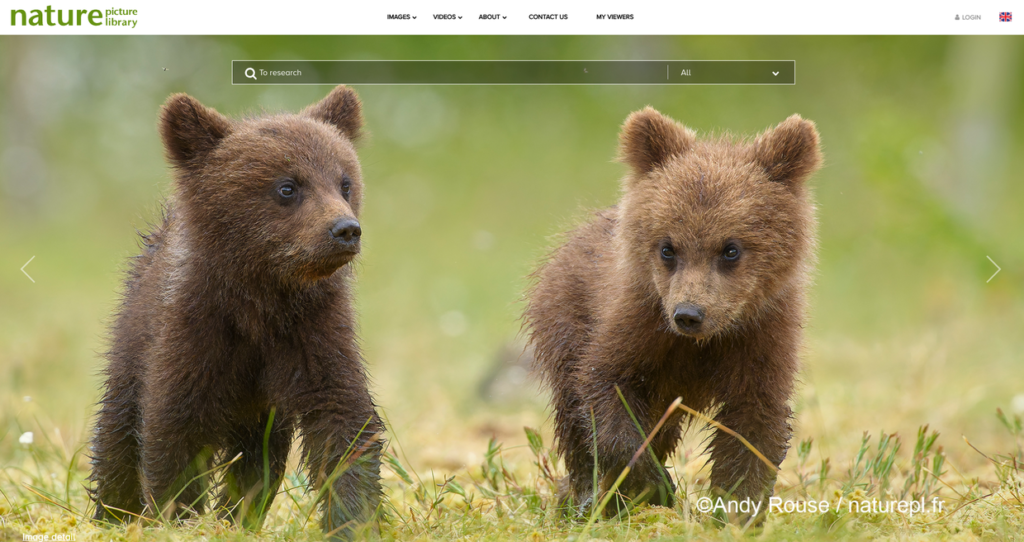
Nature Picture Library is one of the most respected specialist agencies for nature and wildlife photography. Their images appear in BBC documentaries, major science publications, and international books — the kind of editorial placements that carry real weight for a photography career.
What makes Nature Picture Library stand out is its conservation commitment: the agency donates a portion of its quarterly profits to wildlife conservation organizations worldwide. If that mission matters to you, it’s a genuine differentiator.
Admission is by review. You’ll need to contact them directly with your portfolio. They’re selective, but for photographers with serious wildlife work, this is one of the best homes for it.
I’d reach out with a curated edit of your strongest 20–30 images rather than your full catalog. Specialist agencies like this value depth over volume.
2. Minden Pictures
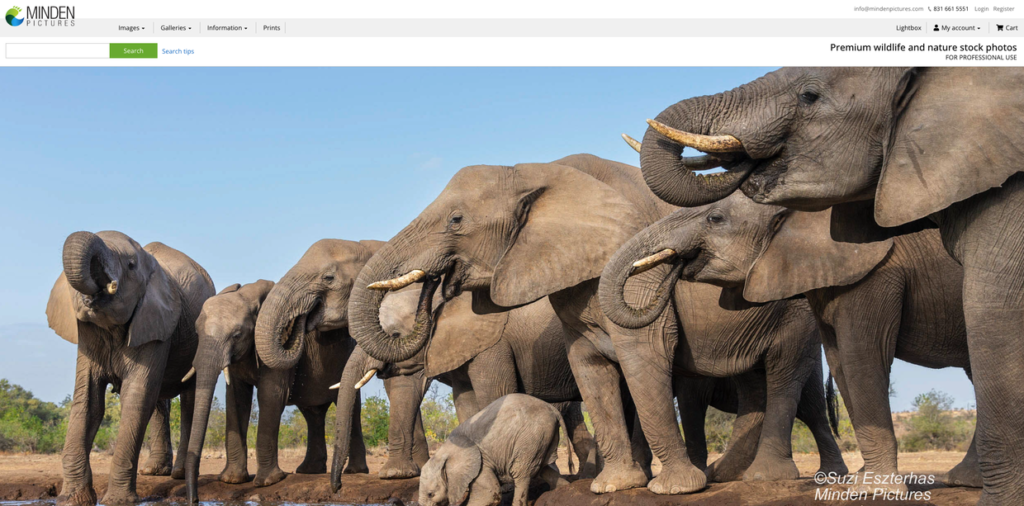
Minden Pictures bills itself as the premier provider of nature stock photography — and for editorial and scientific buyers, that reputation holds. Their contributor roster includes award-winning photographers whose work appears in National Geographic, Nature, and similar publications.
This isn’t a self-upload platform. Minden Pictures works with a curated group of photographers and sells to professional buyers in publishing, advertising, and film.
Commission rates aren’t published publicly, but rights-managed licensing at this level typically returns 40–60% to contributors.
The catch: they’re selective. If your portfolio leans toward scientific or natural history subjects — rare species, behavior sequences, remote ecosystems — you have a real case to make.
Contact them through their website with a direct portfolio link and a clear statement of what you specialize in.
3. Getty Images / iStock

Getty Images and iStock operate under the same parent company but serve different segments of the market.
Getty is the premium editorial and commercial tier — images that end up in newspapers, ad campaigns, and major publications. iStock is their subscription-based platform, where high download volume is the model.
For nature photographers, the practical entry point is iStock. You’ll submit sample images for review, and once approved, your work becomes available to iStock’s large subscriber base. Getty’s editorial side is invitation-only for most contributors.
Commission rates on iStock start at 15% for non-exclusive contributors and rise to 45% if you go exclusive. The tradeoff for exclusivity is real: you can’t sell those same images elsewhere.
If you’re just starting out, going non-exclusive lets you submit the same images to multiple platforms while you learn which ones convert best for your style.
4. Alamy

Alamy is one of the largest independent stock photography agencies, with over 300 million images and a contributor-friendly commission structure. Non-exclusive contributors earn 50% of every sale — one of the highest rates in the industry for a marketplace of this size.
What’s different about Alamy compared to subscription-based platforms is the pricing model. Alamy images are sold at market rates rather than bundled into cheap subscriptions, which means individual sale values are significantly higher. A single editorial license on Alamy can pay 10–20x what the same image earns on a subscription platform.
Nature photography sells well here, especially detailed wildlife shots, botanical subjects, and landscape images with strong geographic or seasonal keywords.
Upload is open to all contributors after a quality check. Metadata quality directly affects your visibility here — Alamy buyers search by keyword, so your captions and tags are worth real time investment.
Best Royalty-Free Platforms to Sell Nature Photography Online
Royalty-free licensing means the buyer pays once and can use the image within the license terms indefinitely. You can sell the same image to multiple buyers.
The per-sale value is lower than rights-managed, but the potential for passive income is significantly higher — especially with a large catalog.
5. Adobe Stock

Adobe Stock is deeply integrated into the Creative Cloud ecosystem — when a designer opens Photoshop or Illustrator, Adobe Stock is right there in the sidebar. That built-in placement gives your images direct exposure to the buyers most likely to purchase them: creative professionals.
Contributors earn 33% royalty on standard images. If you submit exclusive content, the rate increases. Uploading is free and open to anyone after a straightforward contributor setup.
Nature photography performs well on Adobe Stock, particularly clean, well-lit subjects with room for text overlay — the kind of images designers actually license for campaigns and editorial layouts.
The same keywords you’d tag in Lightroom work well here — Adobe’s search engine rewards descriptive, accurate metadata over keyword stuffing.
6. Shutterstock

Shutterstock is one of the largest stock photo marketplaces in the world, with millions of buyers ranging from small bloggers to Fortune 500 marketing teams. The volume is real, and so is the competition.
Commission rates start at 15% and scale up to 40% based on your lifetime earnings milestone. The more you sell, the better your rate. It’s not the most generous structure in the industry, but the buyer volume compensates — especially for photographers with large, keyword-rich catalogs.
Nature photography that performs best on Shutterstock tends to be versatile: clean animal portraits, dramatic landscapes, seasonal subjects, and anything that works as a blog header or social media visual.
Shutterstock’s algorithm surfaces portfolios with regular new uploads, not one-time batch submissions — so consistent additions matter more than a single large drop.
7. 500px

500px sits in an interesting middle ground: it’s a photography community and a stock licensing marketplace at the same time. Photographers build public portfolios that double as licensable catalogs, which means your work gets community exposure alongside commercial licensing.
For licensing, 500px connects contributors to Getty Images through their partnership. That’s a meaningful distribution channel — your 500px portfolio can surface in Getty searches without a separate Getty application.
Commission rates are 30–60% depending on whether you’re an exclusive or non-exclusive contributor. The community aspect is genuinely useful too: engagement on your 500px profile can drive licensing interest independently of the Getty pipeline.
500px rewards quality over volume — a smaller, highly curated portfolio tends to perform better here than a mass-upload approach.
8. Dreamstime
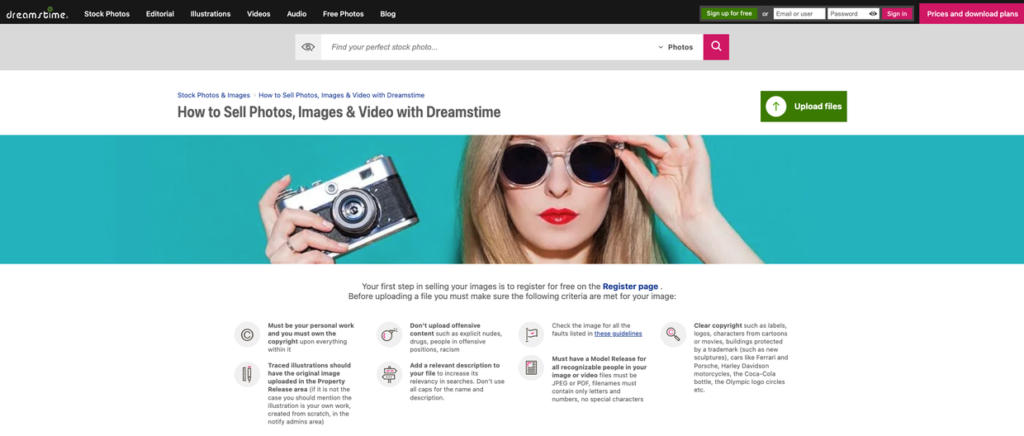
Dreamstime is one of the older royalty-free stock platforms and has built a steady contributor community over the years. Contributors earn royalties based on download volume, with rates ranging from 25–50% depending on exclusivity.
Dreamstime has a straightforward upload and review process: create an account, submit images for moderation, and approved photos go live in their marketplace. It’s not the largest platform, but it’s a reliable supplementary income channel for photographers who want to distribute across multiple sites without much extra effort.
Dreamstime offers a bonus for exclusively submitted images — worth considering for images you plan to remove from other platforms anyway.
Best Print-on-Demand Platforms for Nature Photographers
Print-on-demand platforms remove the production and shipping burden entirely.
A buyer finds your image, places an order, the platform prints and ships the product, and you receive a percentage of the sale. You never touch inventory.
Commission rates are lower than direct digital sales, but there’s no upfront cost and no physical overhead.
9. FineArtAmerica
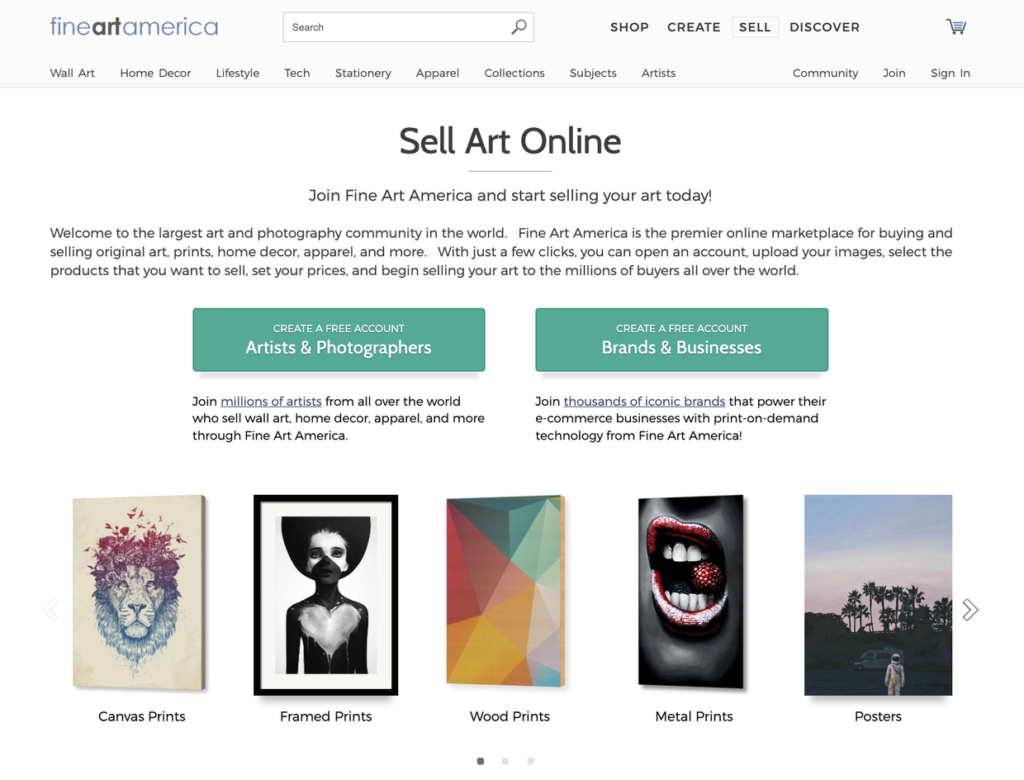
FineArtAmerica is the largest print-on-demand marketplace for photographers and artists, with millions of active buyers searching for wall art, home decor, and lifestyle products. Nature photography — landscapes, wildlife, botanical — is one of the consistently strongest-performing categories on the platform.
You set your markup above FineArtAmerica’s base price, which means you control your margin. There’s no cap on how much you charge. FineArtAmerica handles printing, framing, packaging, and customer support. You just supply the image files.
The free tier is fully functional. A premium plan ($30/year) removes their branding and unlocks additional selling tools — worth it once you’re making consistent sales.
FineArtAmerica prints at sizes up to 60 inches, so your highest-resolution files will open up the widest range of products for buyers.
10. SmugMug
SmugMug is photographer-first in a way most print-on-demand platforms aren’t. It combines a professional portfolio site, a client gallery tool, and a print store in one platform — you get a fully customizable photography website rather than a listing page inside someone else’s marketplace.
SmugMug partners with major print labs to offer a wide range of products: prints, canvases, metal prints, and more. You set your own prices and keep 85% of every sale above the base cost. That’s one of the best print margins in the industry.
Plans start at $13/month. It’s a paid platform, but what you’re paying for is a professional presence you control — not a listing buried among millions of other photographers.
SmugMug is worth considering even if you only use the portfolio features — having a professional home base for your work makes every other platform you join more credible. For a detailed comparison, see our guide on Envira Gallery vs. Flickr vs. SmugMug.
11. Creative Market
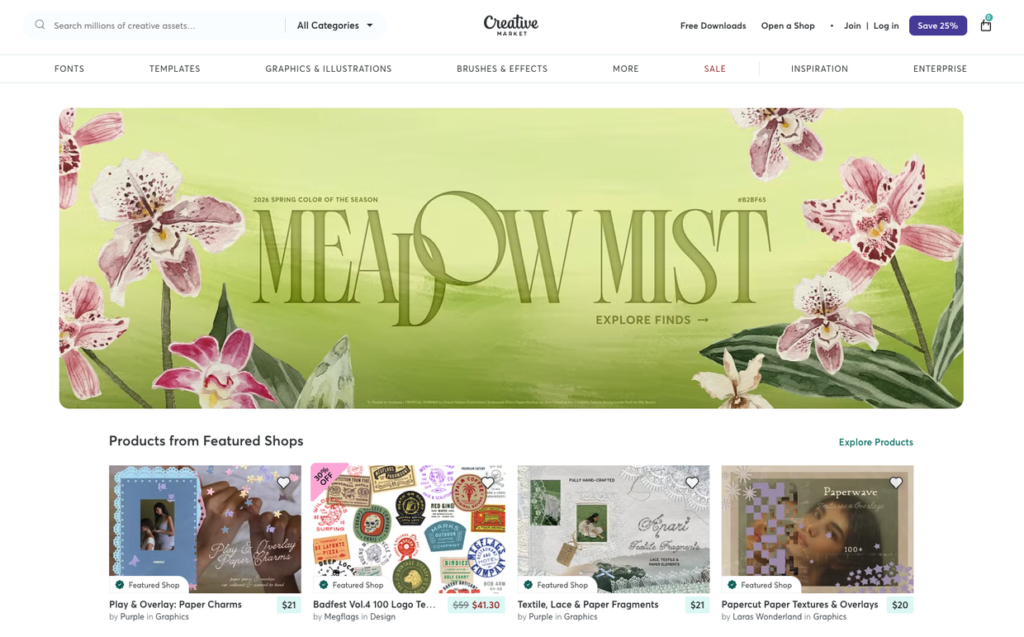
Creative Market is a design-focused marketplace where photographers can sell digital products to a creative audience. It works differently from traditional stock sites: you create and sell product listings rather than uploading to a general catalog. Think Lightroom preset packs, texture collections, or curated photo bundles alongside individual images.
The commission structure is straightforward: Creative Market pays contributors 70% of every sale, with no subscription model and no revenue-sharing tiers. Buyers pay the price you set, and you keep the majority of it.
Nature photography sells well here as texture packs, background collections, and seasonal bundles. The buyers are typically designers, bloggers, and social media creators looking for versatile, high-quality assets.
To apply as a seller, submit a shop application with sample work. Creative Market approves sellers based on portfolio quality, so treat the application like an agency submission — your first impression matters.
How to Sell Nature Photography Directly From Your Own Website
Every platform on this list takes a cut. Some take 30%. Some take 85%. Selling directly from your own website means you keep 100% of every sale, and you own the relationship with your buyer.
Direct sales also give you control that no marketplace can match: your branding, your pricing, your customer data, and your storefront — not buried inside a platform with millions of competing images.
If your site runs on WordPress, Envira Gallery makes this possible without custom development.
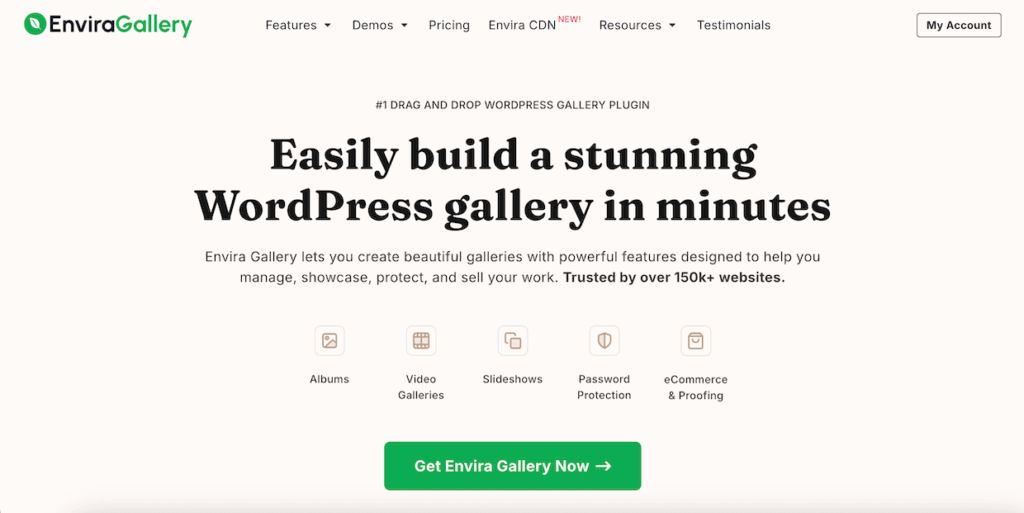
With the Digital Downloads feature (Pro plan, starting at $99.50/year) and WooCommerce — which is free — you can turn any gallery into a shoppable storefront where visitors purchase digital downloads directly from your images.

Setup takes minutes. Install Envira Gallery Pro and WooCommerce on your WordPress site, create a gallery, and enable Digital Downloads. Assign each image a product, set your price, and buyers complete checkout directly on your site — no third-party account required on their end.
You can also combine this with Envira’s watermarking and image protection features to display your work at full quality without worrying about unauthorized downloads.
Worth Knowing
Direct sales work best when combined with a platform strategy — use stock sites to get discovered, then funnel engaged buyers to your own site where margins are higher. A link to your website in your contributor bio is a small change that compounds over time.
Tips to Sell More Nature Photography Online and Make Money
Choosing the right platform gets you in the room. These habits are what actually generate sales once you’re there.
1. Treat Keywords Like a Second Craft
Stock buyers don’t browse galleries — they search. The metadata you attach to an image is how it gets found. Describe species by common name and scientific name, location, season, behavior, lighting, and mood. An image of a red fox at dawn in a snowy field should carry keywords like “fox,” “Vulpes vulpes,” “winter wildlife,” “snow,” “dawn light,” and every descriptive term a designer or editor might actually type.
2. Embed Metadata Before You Upload
Write your captions, keywords, and copyright information directly into the file metadata in Lightroom or Bridge before uploading anywhere. It saves time across multiple platform submissions — and ensures your copyright information travels with every image regardless of where it ends up.
3. Focus on What Actually Sells
The nature images that sell most reliably share common traits: clean backgrounds, sharp focus on the subject, good light, and clear species identification. Dramatic wildlife behavior sequences, unusual species, and images with strong seasonal or geographic context perform consistently well on both editorial and stock platforms. Generic subjects — the tenth stock photo of a sunset — are the hardest to sell at any price.
4. Set a Personal Quality Floor
Every image you upload competes against every other image on the platform. It’s better to have 200 genuinely strong images in a catalog than 2,000 that include mediocre work. Platforms that reward high download rates will suppress your weaker images, and that hurts your overall visibility. Editing ruthlessly before you upload is one of the most underrated moves in stock photography.
5. Understand Model and Property Releases
Nature photography rarely involves people, but if a person appears in your image — even as a small background figure — most commercial platforms require a signed model release for commercial use. Some platforms also require property releases for recognizable private locations. It’s worth reviewing the requirements for each platform before submitting images that might fall into a gray area.
6. Distribute Across Platforms Strategically
No single platform will maximize your earnings across every image. I’d suggest starting with two or three that match your primary goals — say, Alamy for per-sale value, Shutterstock for volume, and FineArtAmerica for print sales — and then adding platforms once you have a feel for what performs where. Checking exclusivity terms first keeps you from accidentally locking your best images out of the channels where they’d earn the most.
7. Pitch Your Work to Magazines and Publications
Editorial markets are one of the most underused income streams for nature photographers.
Magazines like National Geographic, BBC Wildlife, Audubon, and dozens of regional nature and science publications license images directly from photographers — and rights-managed rates for a single editorial placement can run $200–$1,500 or more depending on usage.
Unlike stock platforms, where you upload and wait, editorial pitching is direct: identify the publication, study what they’ve run recently, and contact the photo editor with a curated selection relevant to their current coverage.
Conservation organizations, nonprofits, and annual report publishers are worth targeting too — they regularly need high-quality nature imagery and have real budgets to pay for it.
Want to sell your nature photos directly — and keep every dollar?
Envira Gallery, the WordPress gallery plugin, lets you turn any photo gallery into a shoppable storefront — no marketplace fees, no competing listings, just your work and your buyers.
FAQs About Selling Nature Photography Online
How much can you realistically earn selling nature photography online?
Earnings vary widely based on platform, catalog size, and image quality. Royalty-free contributors on platforms like Shutterstock or Adobe Stock typically earn a few cents to a few dollars per download. Rights-managed agencies like Alamy or Minden Pictures can return $50–$1,500+ for a single editorial placement. Photographers with large, well-keyworded catalogs on multiple platforms often report $200–$2,000/month in passive income, but that typically takes several years of consistent uploads to build. Direct sales via your own website offer the highest per-sale margin but require building your own audience.
Do you need a model release to sell nature photos?
For most nature photography — wildlife, landscapes, botanical subjects — no model release is required. However, if a recognizable person appears in the image, even incidentally, a model release is required for commercial licensing on most platforms. Some platforms also require property releases for images taken at certain private locations or of recognizable trademarked structures. Editorial submissions generally have fewer release requirements than commercial licensing, so check each platform’s submission guidelines.
Which platform pays the most for nature photography?
On a per-image basis, rights-managed agencies like Minden Pictures and Alamy typically produce the highest individual sale values. Alamy’s 50% commission on market-rate sales means a single editorial license can be worth hundreds of dollars. On a volume basis, large subscription platforms like Shutterstock or Adobe Stock generate more frequent payments but at lower per-download rates. Your own website — zero commission — is the highest-margin option of all, but requires an existing audience to drive traffic. If your site runs on WordPress, Envira Gallery makes it straightforward to set up a shoppable gallery without custom development.
Is nature photography a good niche for stock photography?
Yes — nature photography is one of the most in-demand categories on stock platforms, used by publishers, advertisers, educators, nonprofits, and media companies worldwide. Competition is high for generic subjects, though. Photographers who specialize in unusual species, specific geographic regions, or rare behavioral shots tend to stand out. Niche specialization — Antarctic wildlife, alpine wildflowers, freshwater ecosystems — performs better than broad nature content on most platforms.
Can you sell the same nature photo on multiple platforms?
Yes, in most cases. As a non-exclusive contributor, you can upload the same image to Shutterstock, Adobe Stock, Alamy, Dreamstime, and others simultaneously. Some platforms offer higher commission rates for exclusive contributors — but exclusivity means you cannot sell those images elsewhere. Read each platform’s contributor agreement carefully before opting into any exclusivity arrangement. Most photographers are better served staying non-exclusive, especially early in their stock career.
I hope this breakdown helped you find the best places to sell nature photography online and start earning from work that deserves to be seen. If you found it useful, these resources are worth bookmarking too:
- Best Places to Sell Photos Online and Make Money
- Top Print-On-Demand Photography Services for Passive Income
- Tutorial: How to Sell Photos on WordPress
- How to Price Photography Services: Packages, Rates, & More
- How to Sell Your Landscape Photography
- Best Tips to Become a Successful Freelance Photographer
Don’t forget to check out our blog and follow us on X (Twitter) for the best photography tips, resources, and WordPress tutorials.









Very helpful article..thank you for taking the time to write it…l am an advanced amateur photograher with many shots friends are urging me to sell, and now you have a place to start.
Hey Maikel, we are glad that we helped you. Do follow us on Facebook and Twitter for more free photography resources. 🙂
I’m a new amateur photographer. I have about 500 shots +/-, maybe less than half are on Facebook. If I wanted to sell those shots would I need to take those down off my board or would I be able to keep them up if someone bought the rights?
Great article, thanks!
Hey my name is Sifiso
I really like and enjoy teaching pictures of nature and sometimes animals but I’m still an amateur coz I use my phone but I do have good shot
I’m not sure if I’d fit in, in the above mentioned sites
I was looking for something basic right now I just want people to see my pictures on Google when they search.
I’d like to make money out of them but the main thing is just getting them out there
Can you belong to more than one site?
Can i sell my photos on more then one site?
My husband and I have been traveling the U.S. for over a year now and I’ve been taking lots of photos of the diverse landscape. One of my favorite subjects is old barns. My question is can I sell photos of someone’s barn without their permission?
Do my photos have to have watermarks on them to keep them mine?
I am wondering how or where I can find information on how to price photos that I have if I wanted to start selling them. Can anyone give me ideas where to start?
Thank you in advance for your help.
My place is one of the best tourist spot and I would like to sell photo from it as part of my tour organizing business.
I also want to sell pictures
Where would I sell??..
In everywere site first wanted money for registration and than I could sell any pic
I want any site or app were I could sell my pics without money
Here is another article we wrote for where to sell your pictures online. Hope this helps
http://enviragallery.com/best-places-to-sell-photos-online-and-make-money/
Stocksy isn t the largest stock photography website, but it certainly isn t the smallest. It has a reputation for being the artsiest stock agency online. That s why it s undoubtedly the site that publishers love to look at when searching for new images.
I’m new at photography, using my iPhone right now. Can you sell iPhone pics online? or do you need to use 35mm camera? People have told me I have a good eye and should publish a book. So I thought i could sell online possibly. Thanks for any feedback.