





If you’re manually updating your WordPress image galleries every time you add new photos, you’re doing it the hard way.
Dynamic image galleries handle that work for you — they pull images automatically based on tags, post attachments, or media categories, and stay fresh without any manual intervention.
In this guide, you’ll learn what WordPress dynamic image galleries are, why they’re worth setting up, and how to build one step-by-step using the best WordPress gallery plugin available.
What Are Dynamic Image Galleries in WordPress?
A dynamic image gallery in WordPress is a gallery that automatically populates with images based on rules you define — rather than requiring you to manually add each photo.
Standard static galleries require you to open the gallery editor and add new images every time your library grows. Dynamic galleries skip that step entirely. They pull images from your WordPress media library based on criteria like:
- A specific image tag or media category
- Images attached to a particular post or page
- A date range, custom field, or other query parameter
Once configured, the gallery updates itself every time matching images are added to your media library. Upload a new photo and tag it correctly — it appears in every gallery connected to that tag automatically.
This is fundamentally different from a standard gallery. Instead of a fixed collection of images you curate by hand, a dynamic gallery is a live query that always reflects your latest content.
Want to start with the basics? See our full guide on how to create a WordPress photo gallery.
Why Use Dynamic Image Galleries on Your WordPress Site?
Dynamic galleries aren’t just a time-saver — they solve real problems that show up as sites grow. Here are the most common scenarios where they make a meaningful difference.
- You’re a Photographer with a Growing Portfolio: Manually maintaining dozens of gallery pages is unsustainable once your portfolio reaches a certain size. With dynamic galleries, you tag images by category (weddings, portraits, landscapes) as you upload them, and every gallery tied to that tag updates automatically. New session? Upload, tag, done. No gallery editing required.
- You Run a Blog with Per-Post Images: Many bloggers attach all their images directly to individual posts. Dynamic galleries can automatically display every image attached to a specific post — no manual curation needed. This is ideal for travel blogs, recipe sites, event coverage, and news outlets that publish image-heavy content regularly.
- You Manage an eCommerce Store: Product photo shoots generate a lot of images fast. Instead of manually updating gallery pages after every shoot, a dynamic gallery tied to a product tag or media category refreshes automatically. Your gallery pages stay current whether you’re adding 5 images or 500.
- You’re Managing a Large-Scale Site or Agency Portfolio: Agencies managing multiple client galleries and portfolio owners with hundreds of work samples have the most to gain from automation. Dynamic galleries eliminate ongoing admin overhead and ensure gallery pages never fall out of date — even as your content library scales.
The Best WordPress Plugin for Dynamic Image Galleries
Not every WordPress gallery plugin supports dynamic galleries. Of those that do, Envira Gallery is the most capable and easiest to use.

Envira Gallery is trusted by 150,000+ websites, has earned a 4.7/5 star rating, and has been downloaded more than 2.5 million times. It’s built for photographers and content creators who need beautiful galleries without wrestling with code.
Here’s why it’s the right choice for dynamic image galleries:
- Dedicated Dynamic Addon — built for tag-based and post-attached dynamic galleries
- Multiple dynamic gallery types — pull from image tags, post-attached images, or custom queries
- Fast gallery loading — built-in lazy loading, CDN support, and optimized rendering keep pages quick
- Fully responsive — every gallery looks great on desktop, tablet, and mobile automatically
- No coding required — configure everything from a clean drag-and-drop interface
- Compatible with major page builders — works with Elementor, Divi, Beaver Builder, and more
Build Dynamic Galleries That Update Themselves
Envira Gallery’s Dynamic Addon lets you set up auto-updating galleries in minutes. Trusted by 150,000+ WordPress sites.
How to Create Dynamic Image Galleries in WordPress
Follow these steps to set up your first dynamic gallery using Envira Gallery.
Step 1: Install and Activate Envira Gallery
Start by installing Envira Gallery on your WordPress site. You have two options:
- Free version — search for “Envira Gallery” in your WordPress plugin directory (Plugins > Add New), install, and activate
- Premium version — download the plugin zip from your Envira Gallery account, then go to Plugins > Add New > Upload Plugin to install it
Dynamic galleries require the Pro plan or higher. If you’re on the free Lite plan, you’ll need to upgrade before proceeding.
The Dynamic Addon requires an Envira Gallery Pro plan or higher
Step 2: Install and Activate the Dynamic Addon
Once Envira Gallery is active, you’ll need to install the Dynamic Addon separately.
In your WordPress dashboard, go to Envira Gallery > Addons. Find Dynamic Addon in the list and click Install. Once the installation completes, click Activate.
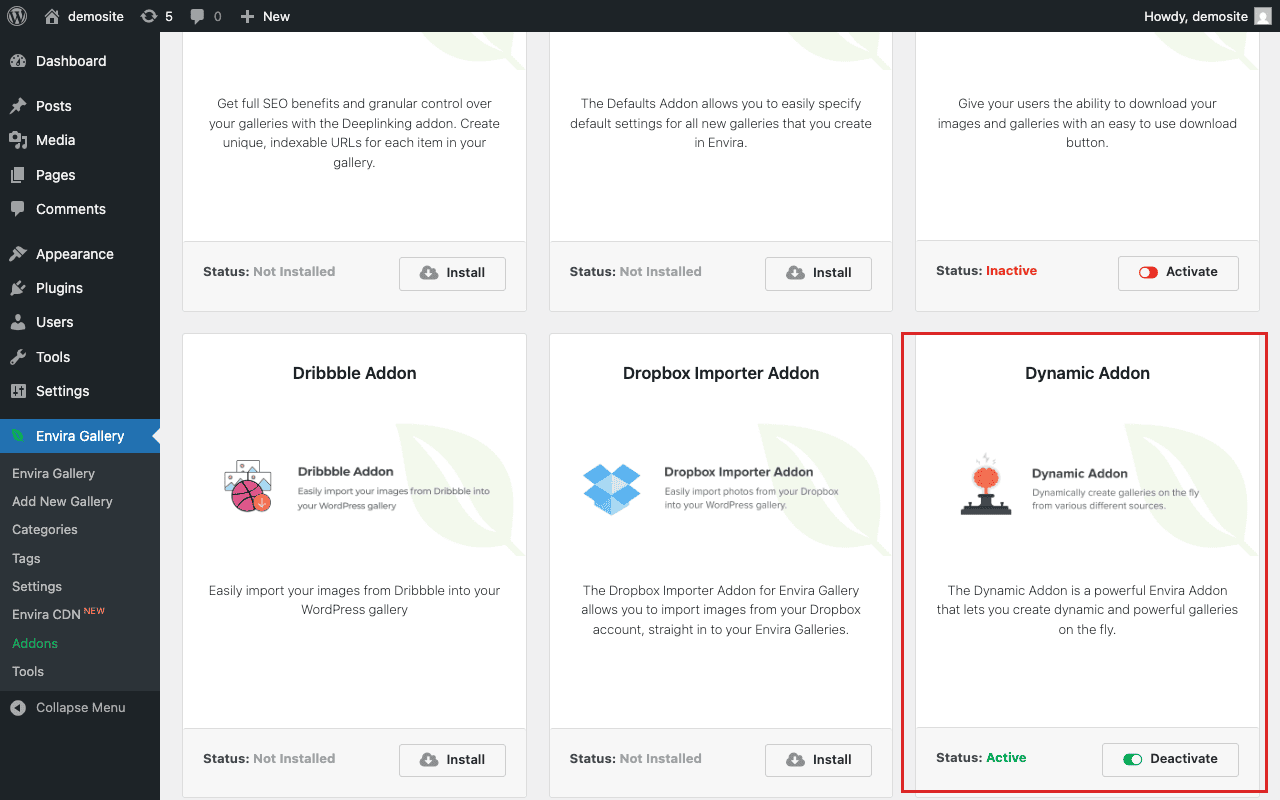
The addon activates immediately — no additional configuration required at this stage. You’ll see Dynamic gallery options appear when you create or edit a gallery in the next step.
Step 3: Configure Your Dynamic Gallery Settings
When you activated the Dynamic Addon, Envira Gallery automatically created a template gallery called Envira Dynamic Gallery.
This is your settings baseline — it controls the default layout, lightbox behavior, and appearance for every dynamic gallery on your site.
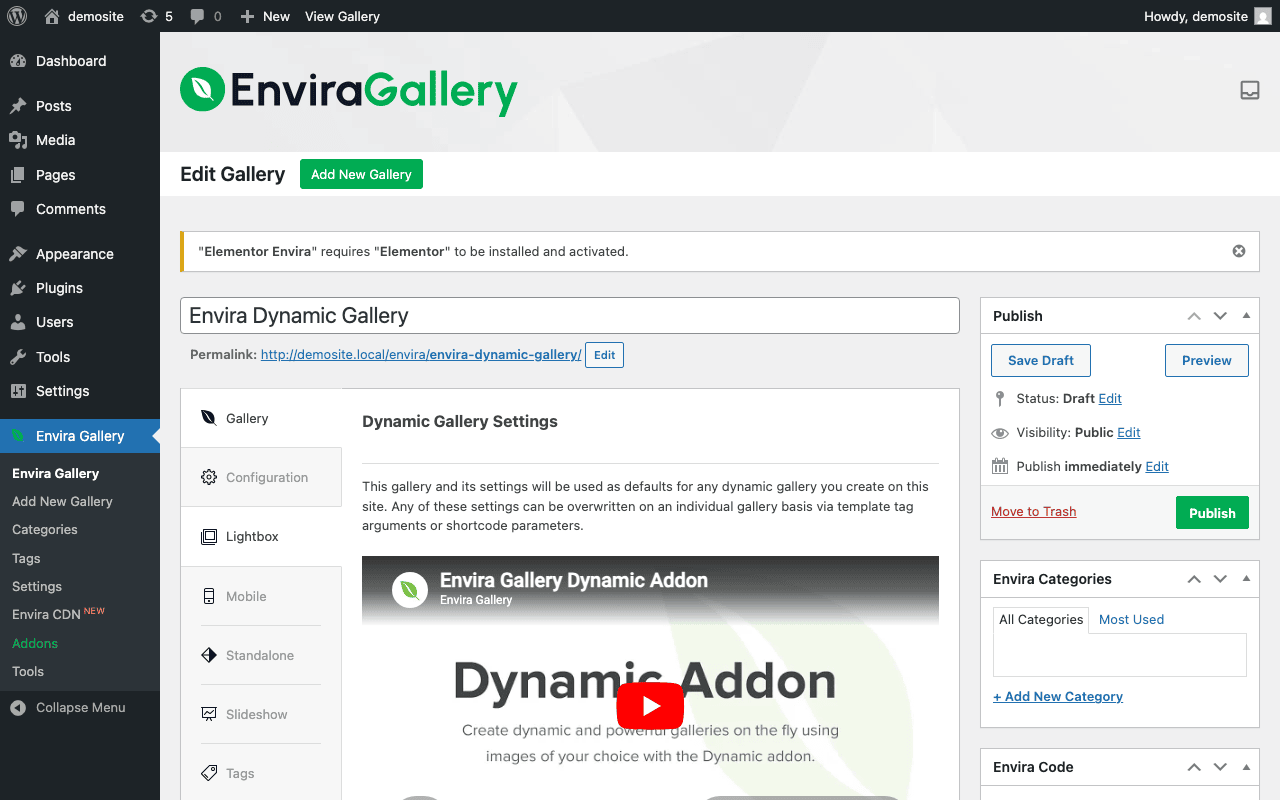
Go to Envira Gallery in your dashboard and click to edit Envira Dynamic Gallery.
Use the Config tab to set your gallery layout and column count, and the Lightbox tab to configure lightbox options. Click Publish to save your settings.
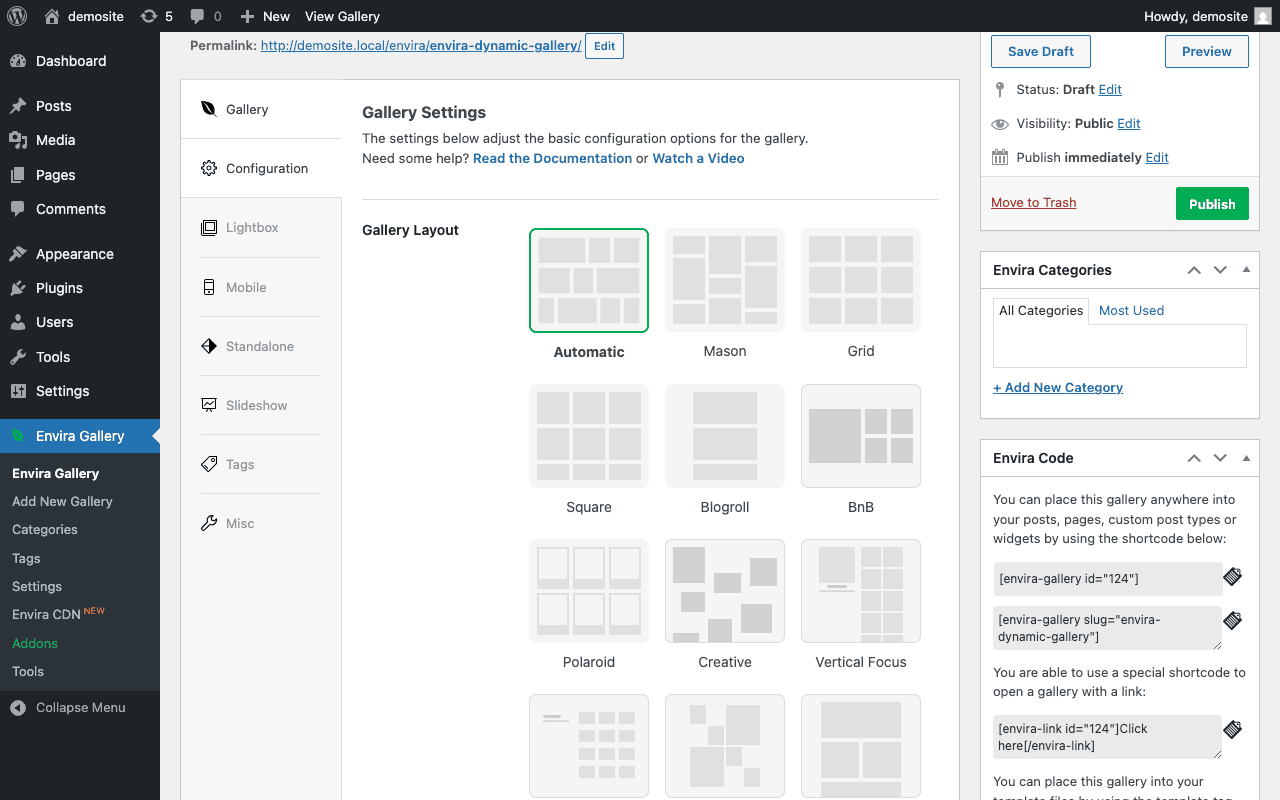
Your settings are now saved as the defaults for all dynamic galleries you embed. In Step 4, you’ll use a special shortcode to display dynamic content — the shortcode parameters tell Envira what images to pull.
Learn how to add and manage image tags in WordPress: How to Tag Images in WordPress
Step 4: Add the Dynamic Gallery to Your Site
Once your gallery is published, you can embed it anywhere on your WordPress site. There are six ways to do it — here’s a quick overview:
Gutenberg Block
Use the Envira Gallery block in the WordPress block editor — the fastest, most visual method
Shortcode
Paste the gallery shortcode anywhere — posts, pages, or custom fields. Works in any editor
Widget Area
Drop a gallery into any widget-ready area — sidebar, footer, or custom widget zones
Page Builders
Add galleries via the Envira module in Elementor, Divi, Beaver Builder, and other builders
PHP Template
Embed programmatically using the envira_gallery() PHP function in your theme files
Full-Width Page
Use Envira’s full-width layout template to create distraction-free, immersive gallery pages
Here’s how to use the three most common methods in detail:
Method 1: Add the Gallery Using the Gutenberg Block
This is the quickest method if you’re using the WordPress block editor:
Open the post or page where you want the gallery. Click the + button, search for Envira Gallery, and select it from the results.
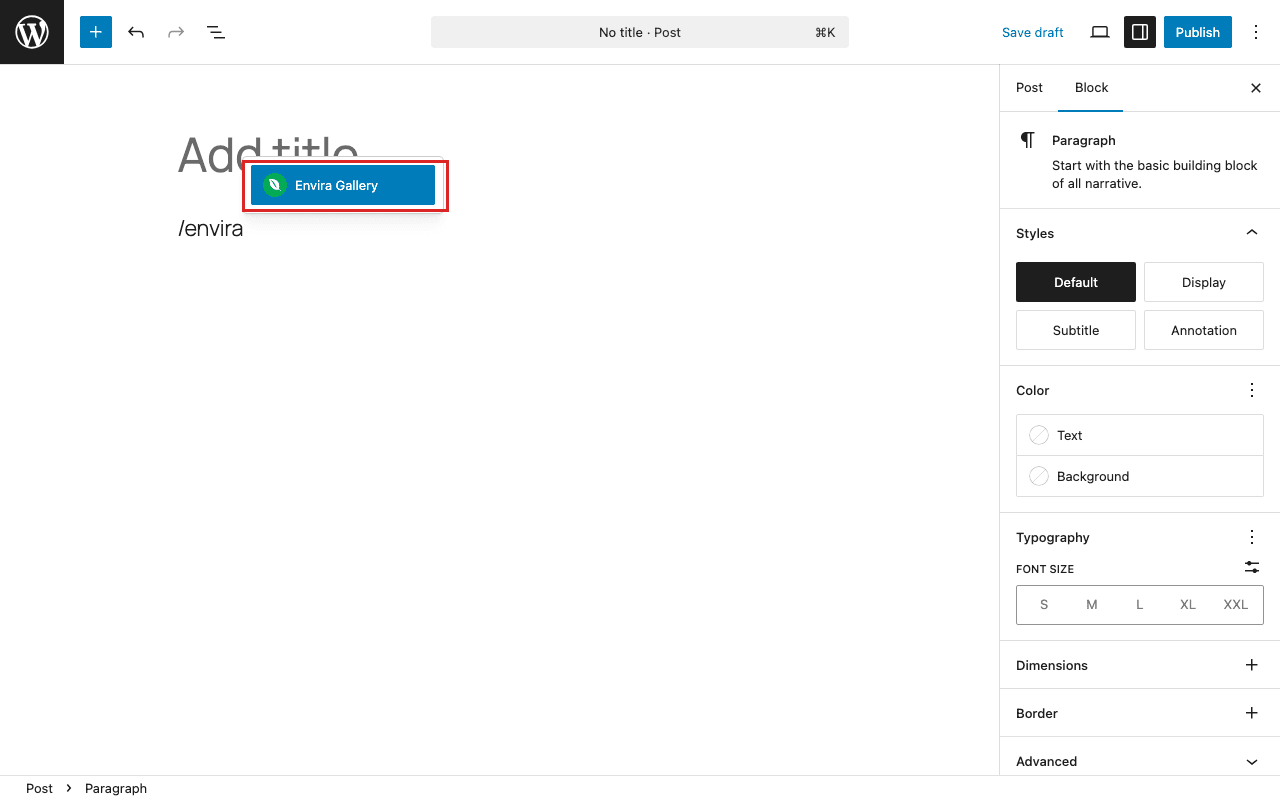
Use the dropdown in the block to select Envira Dynamic Gallery — it previews directly in the editor.
Click Update or Publish to save. This method works best for displaying images attached to the current post. For tag-based or cross-post dynamic galleries, use Method 2.
Method 2: Add the Gallery Using a Shortcode
Dynamic galleries use a special shortcode format. Use [envira-gallery-dynamic] with a parameter that tells Envira what content to display.
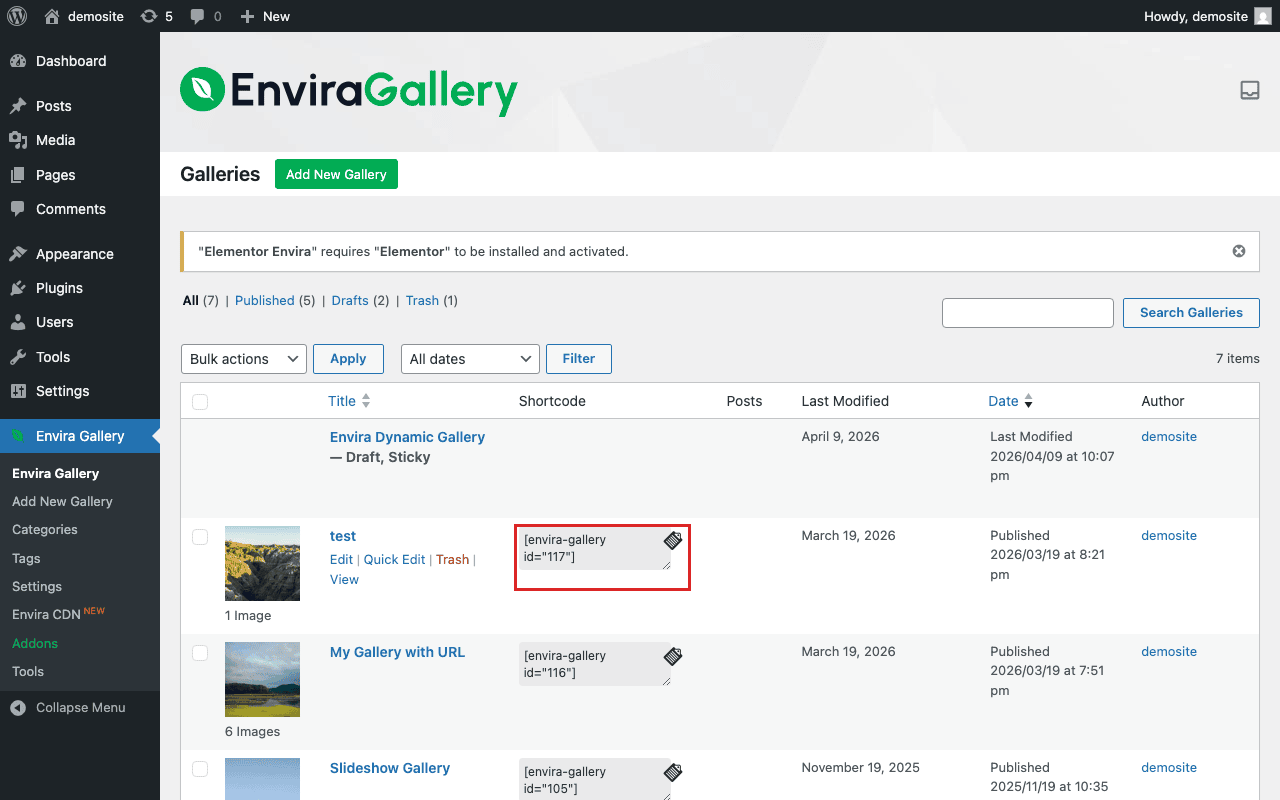
For post-attached images, use [envira-gallery-dynamic id="POST_ID"].
The POST_ID is the ID of the post whose attached images you want to display — you can find it in the URL when editing that post (e.g., post.php?post=1234&action=edit).
Images need to be uploaded directly to that post to be considered “attached” — images inserted from the Media Library are not included.
For tag-based images, use [envira-gallery-dynamic id="tags-tagname"] — replace tagname with a WordPress media tag.
Tag your images by going to Media > Library, selecting an image, and adding a tag in the sidebar. To pull from multiple tags at once, separate them with commas: [envira-gallery-dynamic id="tags-weddings,portraits"]. Keep in mind that this option requires the Tags Addon.
Paste it into any post, page, or text widget where you want the gallery to appear.
The shortcode works in the classic editor, block editor (using a Shortcode block), page builders, and anywhere else WordPress accepts shortcodes.
Method 3: Add the Gallery to a Widget Area
Go to Appearance > Widgets and find the widget area where you want the gallery (sidebar, footer, etc.). Add a Shortcode widget, paste your gallery shortcode into it, and click Save.
The gallery will appear in your widget area on every page where that widget zone is active.
Page builders, PHP templates, and full-width layouts all support Envira galleries as well. For page builders, look for the Envira Gallery element or module in your builder’s element library.
For PHP-based embedding in theme templates, use <?php envira_gallery('your-gallery-slug'); ?>.
FAQs About WordPress Dynamic Image Galleries
What is a WordPress dynamic image gallery?
A WordPress dynamic image gallery is a gallery that automatically populates with images based on rules you set — such as a specific image tag, images attached to a post, or a media category. Unlike static galleries that require manual updates, dynamic galleries refresh automatically when new matching images are added to your media library.
Do I need a paid plan to use dynamic galleries in Envira Gallery?
Yes. Dynamic galleries in Envira Gallery require the Dynamic Addon, which is available on the Pro plan and higher. The free Lite version does not include the Dynamic Addon. You can view all plan options at enviragallery.com/pricing.
Will my dynamic gallery update automatically when I add new images?
Yes. Once your dynamic gallery is configured, it updates automatically. For tag-based galleries, any image you upload and tag correctly will appear in the gallery immediately. For post-attached galleries, images attached to the specified post are displayed automatically without any manual gallery editing.
Can I use dynamic galleries with page builders like Elementor or Divi?
Yes. Envira Gallery is compatible with Elementor, SeedProd, Divi, Beaver Builder, and other major WordPress page builders. You can add your dynamic gallery using the dedicated Envira Gallery element in your page builder, or by pasting the gallery shortcode into a shortcode module.
What’s the difference between a dynamic gallery and a dynamic album?
A dynamic gallery automatically pulls individual images from your media library based on tags or post attachments. A dynamic album is a higher-level grouping that automatically organizes multiple galleries into an album based on tags or custom criteria. Dynamic albums are a separate feature in Envira Gallery and are great for photographers who want to auto-generate client proofing galleries or portfolio archives.
That’s it! I hope this article helped you set up dynamic image galleries on your WordPress site. If you liked this article, check out the following resources:
- How to Create a WordPress Photo Gallery (Easy Tutorial)
- How to Tag Images in WordPress & Add Media Library Categories
- How to Make a Filterable Gallery Portfolio in WordPress
- How to Create a WordPress Video Gallery
- How to Create a Photo Album in WordPress (Step-by-Step)
Don’t forget to check out our blog and follow us on X (Twitter) for the best photography tips, resources, and WordPress tutorials.